
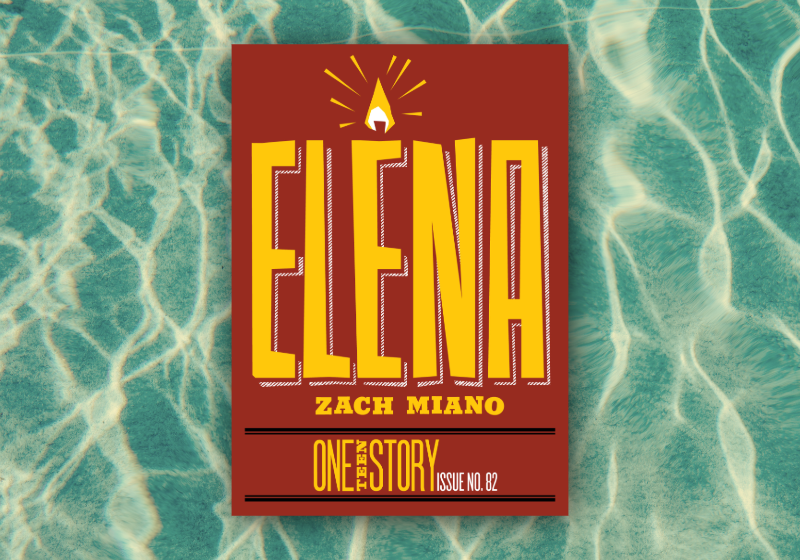
In “Elena,” one of the winning stories from our Teen Writing Contest, Zach Miano writes of a young man’s impending departure for college and the necessary parting from his neurodivergent sister. In this interview with Patrick Ryan, Zach talks about how his past and present experiences growing up in Spain, volunteering with neurodivergent adults, and studying medicine continue to shape his perspective as a writer.
PR: Where did you get the idea for “Elena”?
ZM: The idea for “Elena” grew out of my experiences volunteering with neurodivergent adults over the past five years—as a tennis coach for adults with Down Ssyndrome and autism through the Fundación Emilio Sánchez Vicario in Barcelona, and later through Haverford’s chapter of Best Buddies International. I wanted to capture the duality I kept encountering in that work: the real beauty of that world alongside the quiet struggles of the families who live in it. I set the story in Barcelona, where I grew up, and grounded it in an important moment of transition for Uri and his family—leaving home to go to college in a different country, which is something I personally experienced.
PR: How long did the first draft of the story take you to write?
ZM: It was very fast. I immersed myself into Uri’s world and wrote the entire story in two or three days.
PR: After reading this story for the first time, it occurred to me how much you aren’t saying—not just at the end but throughout. So much of the emotional import of this story resides in the interstice. Were you conscious of that when you were writing? Did it make the story more challenging to write?
ZM: I think the unspoken realities of this story are very true to the world I was writing about. In a family centered around someone with an intellectual developmental disorder, the feelings and needs of their sibling often do not take precedence. That isn’t something unique to neurodivergence. In any family shaped by one person’s crisis or need, there is a receding of the other. Everyone else’s emotions or needs become secondary because they are in service to that person. So, in some ways, it made it more challenging to write Uri’s story while omitting so much. On the other hand, it forced me to find those feelings in gesture and silence rather than in statement—trusting the reader to feel the weight of it without it being told.
PR: How different is the finished version of the story from the one you first thought up in your head? And were there any surprises for you in the writing?
ZM: I really was just writing without a fixed endpoint in mind. The buildup to Elena’s birthday created its own tension as I wrote, and once I reached the day of the birthday party, I realized the story had done what I wanted it to do. It needed to end there. Quite honestly, the only big surprise for me was that I captured the emotional weight I wanted to capture without anything particularly out of the ordinary happening.
PR: Without giving too much away…there’s a quiet “reveal” at the end of the story that sheds additional light on Uri’s family and might surprise some readers. Did you always have it in mind to hold back that piece of information until the end? Why did you decide to do that?
ZM: I didn’t necessarily plan that. However, I chose to write in the first person to allow a more organic way of seeing all the characters as Uri experiences them. Uri is not explicitly thinking of his sister’s age or intellectual capacity. These facts are so engrained into his everyday that they are not something he consciously names. Elena just is—as a fact, as something that has always been—so Uri thinks about her daily life and needs, which are far more relevant than any label. The quiet reveal at the end of the story came naturally.
PR: You were one of the winners of the One Teen Story Writing Contest four years ago (in the 13–15 age category). What did you do when you found out you were one of the winners for a second time?
ZM: I had just recently gotten home from college, after finishing my sophomore year. My parents and brother were all at work when I got the email, so I immediately texted my family group chat, and then called a few friends to share how excited I was.
PR: What are you working on now?
ZM: I’m currently an English major going into my junior year at Haverford College, where I also study on the premed track and am gaining lots of clinical experience outside of school. This summer I have started to explore the tradition of physician-writers and think about what it might mean to write about the medical world from a narrative perspective.
PR: What’s the best piece of advice about writing you’ve ever heard?
ZM: I am lucky to have had many incredible writing mentors—in many languages, both within my family and through my schooling. I keep gathering advice that surfaces at different times. But one truth I find inescapable, and I keep coming back to, is something I read in Barbara Kingsolver’s Demon Copperhead: “a good story doesn’t just copy life, it pushes back on it.” I love that line. I think about it every time I sit down to write.